Skincare & aesthetics

  • Scottish Government to launch Non-surgical Procedures Bill – What does it means for England?

    Scottish Government to launch Non-surgical Procedures Bill – What does it means for England?

    On 18th March 2026, the Scottish Parliament passed the Non-surgical Procedures and Functions of Medical Reviewers (Scotland) Bill, which will form a new framework to regulate Non-surgical cosmetic treatments and aims to tackle client safety concerns. The Bill is expected to come into force in Scotland in September 2027, but what does this mean for those delivering aesthetics treatments in England?

    Key points of the new legislation for Scotland are:

    • Age Restriction: It will be illegal for under 18s to receive certain cosmetic procedures such as dermal fillers or stronger chemical peels, addressing concerns around the pressures young people face via social media to undergo procedures that may have physical or psychological impacts upon them immediately or in future.
    • Approval Only for Licensed Healthcare Professionals: Only those registered with regulated UK bodies such as doctors, dentists, nurses, midwives, pharmacists, physiotherapists and other allied health professionals will be permitted to perform non-surgical procedures (or to otherwise oversee suitably qualified professionals to act under their direction to deliver treatments), within an approved premises.
    • Restrictions on Premises: Procedures will only be able to be carried out in โ€˜permitted premisesโ€™ as defined by the Bill such as medical settings or registered clinics. It is likely mobile based therapists and the like working on a casual basis will no longer be accepted.
    • Enhanced Powers: Healthcare Improvement Scotland will have new powers to inspect premises delivering non-surgical procedures and intervene where practices are found to be unsafe.
    • Powers to Extend Regulations: The Scottish Government will have powers to amend the list of regulated procedures, define who can perform them, qualifications they will require to perform treatments and how compliance can be enforced.

    The Scottish Bill will cover non-surgical procedures that can or will:

    • pierce or penetrate skin
    • not provided as part of NHS healthcare
    • not delivered for medical treatment purposes
    • not already licensed under the Civic Government (Scotland) Act 1982

    Examples of treatments which may come under enforcement of the Scottish Bill (although this is subject to further extension once the legislation becomes law in 2027):

    • Ablative laser treatment
    • Stronger chemical peels that penetrate deeper than the epidermis (outer layer of skin) so considered high-risk
    • Dermal microcoring
    • Injectable procedure (excluding tattooing)
    • Intravenous procedure
    • Licensed procedure carried out with prescribed anaesthetic
    • Licensed procedure carried out on an intimate area (except non-ablative laser hair removal)
    • Microneedling 1.5 mm or deeper

    Under the new legislation Healthcare Improvement Scotland (HIS) will have powers to:

    • Enter premises non-surgical procedures are suspected of being provided illegally
    • Search premises / seize equipment or records to gather evidence
    • Act against unregistered premises or unauthorised practitioners

    The penalties for breaking the legislation are:

    • Fine up to ยฃ2,500 for unlicensed practice
    • Fine up to ยฃ1,000 for failing to notify authorities of major changes in circumstances
    • Additional sanctions for breaching licence terms or providing misleading information
    What impact does this new Bill have for those delivering these treatments in England?

    Currently there is no definite confirmed plans to introduce a similar Bill to England or Wales.

    While this new legislation is a welcomed step in the right direction by many to ensure safety for clients receiving aesthetics treatments, with the beauty industry long behind other industries that have had tighter consumer protection for many years; some fear this will make it difficult for qualified non-medical beauty professionals to continue in the aesthetics industry and some critics fear it may even create pressure or demand for treatments delivered โ€˜undergroundโ€™ outside of legislation or due to potential rising costs when such treatments become clinic-only based treatments, many clients may seek treatments overseas for a lower cost.

    Until the legislation becomes law in 2027, it is hard to be sure of the exact impact of these changes and the Bill will give the Government powers to amend requirements and enforcement as they see fit.

    Given that the Government in England has no confirmed plans as yet to bring in such legislation, this means there are no immediate requirements for those delivering these treatments in England to make any changes to their practice and they can continue to practice as they do currently.

    It would be wise to take stock of your current business practices, ahead of expected greater client concerns and scrutiny to ensure continued client confidence in your setting and treatments; such as to:

    • Look at your guidance information provided to clients to ensure it is comprehensive.
    • Review practices on health and safety in your setting to ensure you are working to the highest standards.
    • Review your insurance and licensing obligations to ensure you are meeting all requirements.
    • Collate and provide evidence of the qualifications / credentials of those delivering treatments in your setting, recent environmental health inspections and insurance, which is available to clients / potential clients to provide reassurance of your high standards of training.
    • Take opportunities to advance your training where necessary and possible, such as refresh your practical training or develop greater theoretical knowledge to best advise your clients, upskill where you can with OFQUAL regulated qualifications (if not already held). While no specific qualifications have been indicated in the Scottish Bill for non-medics currently, it may be beneficial to still complete this for your setting.
  • How to achieve Glass Skin?

    How to achieve Glass Skin?

    Glass skin is everywhere right now as clients seek to achieve a fresh, ‘better than natural’ aesthetic. The glass skin trend evolved in the K-beauty scene deriving from Korea. It refers to skin that is smooth, flawless and luminous with a sheen that literally resembles glass. The look is achieved through a skincare regime that prioritises intense hydration, exfoliation, and nourishment to create a radiant, pore-less finish that appears as refined and reflective as glass. Many people opt to go make up free once they have achieve the glass skin look for their skin to help maintain the clarity of their skin. Note that creating the full translucence and refinement of the skin this look requires, also requires clients to be healthy from within both in their water intake, diet and lifestyle choices. Now let’s look at how to begin achieving this look…

    Step 1: identifying your skin type and condition

    This is vital to ensuring the products you are using will meet the needs of your skin. Skin can only be perfected when the products used remedy the concerns or provide the support the skin requires to look and feel its best. For example if you have dehydrated skin, this is down to a lack of water but this can cause the skin to overproduce sebum to compensate so understanding this will help you pick products with the right formulation and active ingredients to effectively hydrate your skin,

    Step 2: Cleansing

    You want to be using a cleanser formulated for your skin type. Oil or gel cleansers work well as part of a glass skin regime as they effectively remove environmental pollutants from the pores but donโ€™t strip the skinโ€™s natural oils when used daily. A double cleanse (cleansing your face twice) works best for thoroughly cleaning the skin. For your second cleanse, a foaming cleanser such as CeraVe Foaming Facial Cleanser works well.

    Step 3: Exfoliation

    Exfoliation helps remove dead skin cells and blockages from the pores, revealing the newer, more radiant skin cells beneath. This also allows moisturising products to be better absorbed. To avoid irritation or creating tightness in the skin, it is recommended to exfoliate only once or twice per week. Use a gentle chemical exfoliator such as Neogen Dermalogy Real Cica Pad.

    Step 4: Use a Toner

    Toners help to reduce pore size, restore the pH (acid mantle) of the skin after cleansing to avoid irritation or tightness of the skin. They also help further products such as serums to be better absorbed. Avoid toners containing alcohol or witch hazel to avoid drying out the skin, which is the opposite of what the glass facial seeks to achieve.

    Step 5: Try an Essence

    Essence products are water-based products that add moisture to the skin. They are becoming popular with the K-beauty trendsetters as they deliver potent ingredients to the skin for anti aging, hydrating, healing and soothing properties that make them suitable for almost all skin types. One product well recommended is Then I Met You The Giving Essence.

    Step 6: Hydrate with Serums

    This step is about applying serums tailored to your specific skin needs to actively improve the skinโ€™s condition and appearance through greater hydration. Serums containing Vitamin C, Vitamin E, and Hyaluronic Acid will all be effectively absorbed by skin that has now been thoroughly cleansed and exfoliated. Some products have been formulated to combine the most useful active ingredients such as Peach & Lilyโ€™s Glass Skin Refining Serum which is great for oily or acne prone skin, whereas The Ordinary 100% Plant-Derived Squalane is a natural oil that is greater for drier skin types.

    Step 7: Lock in moisture with a moisturiser with SPF

    Seal in the benefits of your chosen serum or oil, using a high quality moisturiser. One product highly recommended for glass skin results is Origins GinZing Energy-Boosting Gel Moisturiser as it is quickly absorbed into skin but leaves it feeling supple without any sticky or oily residue. Moisturisers which contain SPF benefits are great as an all-rounder to also help protect skin from the effects of sun damage, otherwise be sure to apply an SPF with a protection factor of 15 or above at least once daily.

    Step 8: Weekly Maintenance with Masks

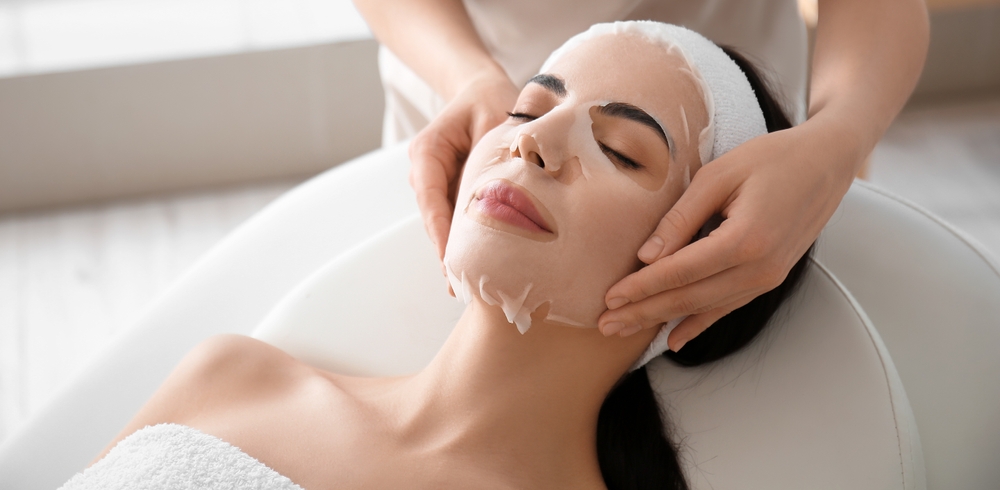
    Once a week you want to use an exfoliating mask such as one formulated with 10% glycolic acid and around 1% salicylic acid. Alternatively a clay mask works well to deeply cleanse the skin. This works well for those prone to oilier skin or blemishes, but is equally kind to dry or sensitive skin to shed dead skin cells and keep the skin feeling smooth. Youโ€™ll also want to follow this with a once weekly hydrating face sheet mask such as Original Glow Sheet Mask is great to leave skin feeling plumped, fresh and radiant.

    Natural steps to achieve glass skin from the inside out include:

    • Avoid excessive sun exposure.
    • Eat blueberries which are high in anthocyanins which are high in antioxidants and avocados which are high in oleic acid which are a healthy fat that helps fight inflammation. Eating cold water fish such as salmon or tuna which are high in Omega-3 fatty acids are also great for maintaining healthy skin.
    • Drinking plenty of water and avoiding alcohol, caffeine, smoking and environmental pollution will also help keep skin looking its best.
    • Regular sleep is essential for skin renewal and avoiding dull skin or dark circles undereye.

    Learn the essential skills to work in skincare, providing therapeutic treatments to your clients (and earning up to ยฃ100 per treatment) with our Accredited Coursesโ€ฆ

  • What is Dermaplaning?

    What is Dermaplaning?

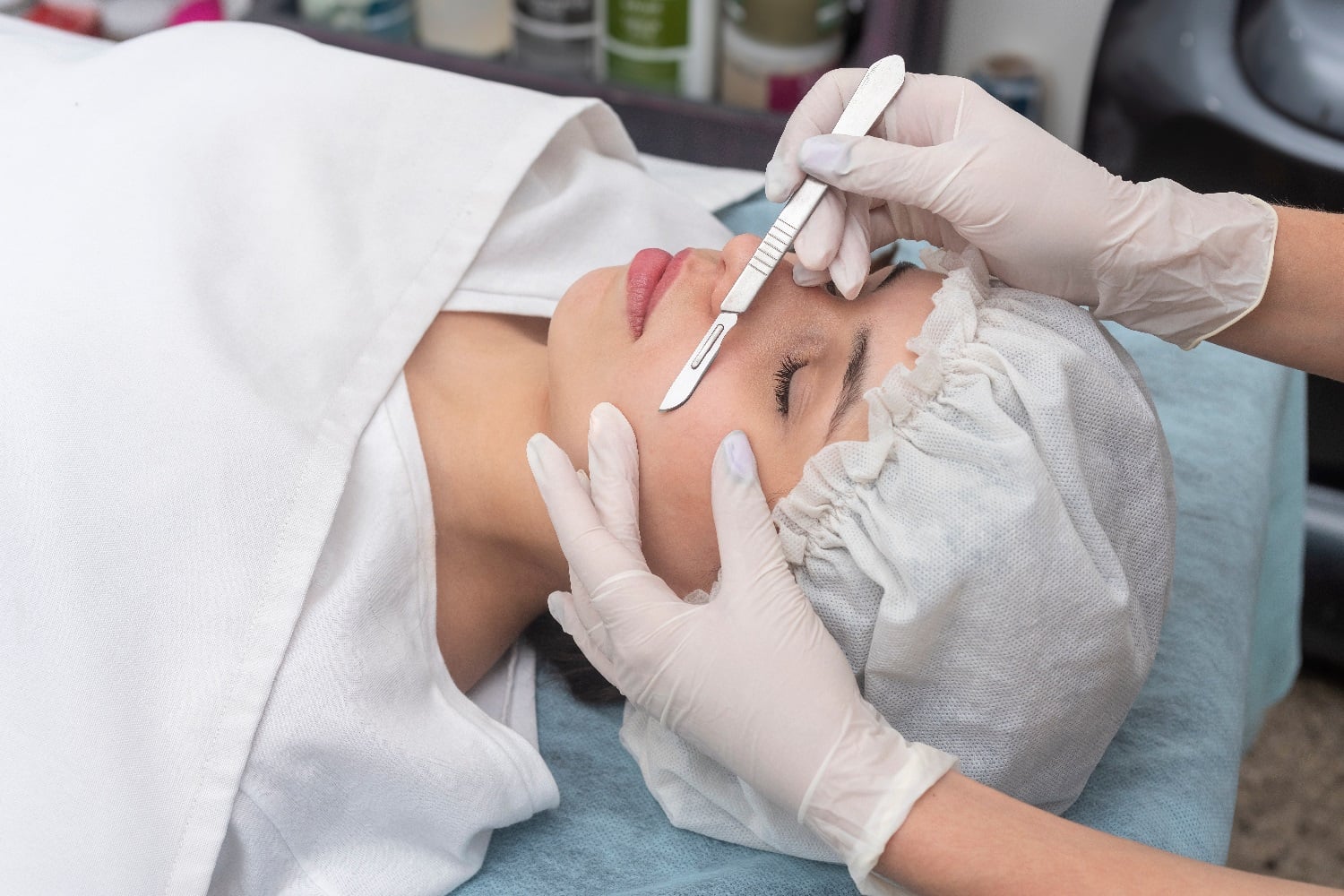
    Dermaplaning is one the most convenient facial treatments to treat skin imperfections. Using a surgical blade the therapist will remove peach fuzz, reduce the appearance of blemishes and other flaws that could be dulling the complexion. Dermaplaning can be used alongside other aesthetic treatments allowing products to penetrate much deeper into the skin and achieving an enhanced result, for example the reduction of lines, wrinkles and scars. The treatment does not use any chemicals and is not invasive, making it safe for majority of clients including pregnant and lactating women.

    How does Dermaplaning Work?

    The surgical scalpel will gently remove dead skin cells, revealing brighter, fresher and more luminous skin. With continuous treatments it will ensure old and damaged skin cells are removed, creating a healthier skin with a brighter complexion and a smoother appearance.

    6 Benefits of Dermaplaning

    1. Removes dead skin cells instantly. Dead skin cells are the number one reason for dull-looking skin. Often more abrasive treatments are used to remove the dead skin cells such as microdermabrasion. Dermaplaning treatment removes dead skin cells by exfoliating them away, revealing the youthful skin underneath.
    2. Say Goodbye to Peach Fuzz. Removing the vellus hair or peach fuzz will reveal smoother skin. The hairs hold onto dirt and oil all which can trigger breakout activity or acne. Removing this hair ensures make up application is cleaner and sharper and also products penetrate deeper into the skin and you use less products!
    3. An All in One Treatment Dermaplaning can help with lots of skin problems. This includes improves a dull complexion, facial hair and uneven skin tone. Dermaplaning is a painless treatment with minimum downtime, making it a go to treatment!
    4. Instantly Smoother Skin. Dermaplaning will provide an instant result! After just 1 session skin will look brighter and feel smoother.
    5. Its Non-Invasive and Safe for Mums-to-be! Dermaplaning is an effective treatment that is safe for both pregnant and breast feeding women (subject to no underlying health conditions being present).
    6. Enhance Natural Beauty. After a few treatments of dermaplaning skin will be brighter, look fresher and outbreak activity will be reduced as it helps to keep skin dirt and oil free and also restores skin health and maintains a more youthful appearance.

    Dermaplaning costs from ยฃ40 upwards for a 45 minute treatment depending on your demographic area so you can easily boost your earnings with these popular skincare treatments!

    Start your journey into aesthetics with our ABT accredited training course:

  • Skincare: Why is it so Important?

    Skincare: Why is it so Important?

    An effective skincare regime can help your skin to look healthy, youthful and radiant. Daily skincare can aid in preventing breakouts, sun damage and reduce the appearance of aging and pigmentation. The skin is our largest organ, so it is imperative that we look after it. A basic skincare routine should include a cleanse, tone, exfoliate and moisturise. However, introducing serums, oils and masks are great too, and remember to always use your sun protection! If we are not regularly looking after our skin, this can lead to acne, hyperpigmentation and age spots! It is important to be well equipped with the science and knowledge regarding our skin, so we know how to look after it!

    Your morning versus evening skincare routine: This will depend on the products you are using. Products that make your skin photosensitive should be applied in the evening. Exfoliation should be done in the evening as well, to remove all the dirt and grime from the day. Relaxing night oils and serum containing meditative ingredients, such as lavender, can be used at night time to encourage sleep. Your morning routine should always consist of your UV protection, even during the winter season, as there is still harmful ultraviolet radiation even when its cold and wet. It is important to keep the skin feeling plump and hydrated during the colder months as well, this could include using a hydrating serum and drinking plenty of water!
    Here are some helpful tips and techniques when thinking about your skincare! When applying products such as cleansers, oils, serums and moisturisers, itโ€™s always a good idea to perform a massage movement over the skin, this helps the products so be absorbs deeper into the different layers of the skin. Choose a morning and evening skincare regime that suits you and your lifestyle. A complicated routine could soon become too time consuming, meaning you will lack motivation in your skincare. Too many products could overwhelm the skin, causing breakouts and blemishes. Starting off with a simple regime, and building this up is always a good place to begin if you are new to the world of skincare!

  • What is Facial Yoga? Caring for Menopausal Skin…

    What is Facial Yoga? Caring for Menopausal Skin…

    With a whole host of celebrities promoting the benefits of facial yoga and many new brands coming through offering their own regimes and routines, this week we explore the hot topic of facial yoga. The benefits of yoga for the body have long been known and practised to keep the body supple. Yoga for the face is no different in that it involves movements and stretches to help tone, strengthen but also relax muscles. Given that there are 42 individual muscles in the human face, there is certainly plenty to work on! Facial yoga involves massage and exercises that stimulate the muscles, skin, and lymphatic system. These movements are designed to soften and relax face muscles to help alleviate tension, stress, and worry – all of which contribute to fine lines and wrinkles appearing in the skin.

    What are the benefits of facial yoga?

    As we age and in particular approach menopause, hormonal shifts in the body can affect the production of collagen production, vital to a youthful appearance. Fat stores under the skin and elasticity of the facial skin can all decrease, leaving the face appearing less defined and sagging, which contributes further to wrinkles and frown lines. Effective massage helps boost both blood and lymph circulation, assisting with cell renewal and manipulation of the facial muscles can help retrain these muscles, remove muscular tension and eliminate excess fluid; to improve the appearance of the skin and contours of the face. It also helps slow down further signs of aging.

    Does facial yoga involve costly equipment?

    Not at all! Using simply a facial serum or oil to provide some slip to the skin, you can effectively massage and help contour the face using your hands alone. Using a range of massage movements to stimulate circulation and working towards lymph nodes for effective drainage of excess fluid/toxins, you can see instant results as skin will appear plumped, lifted and glowing right from the very first treatment. Some routines involve specialist tools such as small facial yoga ball or facial rollers, but an effective lifting and plumping facial massage can be given with effective manual massage movements alone.

    Is specialist skincare required?

    To help get the most from facial yoga, and ensure your skincare regime is optimally effective at tackling your specific skincare concerns, weโ€™d recommend specialised skincare products for your skin type and concerns. Our Online Facial Gym โ€˜Glow Massageโ€™ Course for Menopausal skin includes expert product recommendations (that wonโ€™t break the bank, you only need very little also so they do last!) to give you confidence in picking the right products for your skin concerns. The course also covers the effects of menopause on the skin so you have confidence understanding how to minimise and slow the signs of aging.

    Who is this course suitable for?

    The course is ideal for anyone interested in better understanding how to care for facial skin during the menopause, whether that is to care for their own skin more effectively or to have greater confidence in tailoring skincare treatments for their clients. The facial massage routine taught on the course can be used on yourself, friends/family or indeed paying clients on completion. Ideal also for upskilling and allowing you to offer specialised facial treatments for menopausal skin, these typically attract around ยฃ50-ยฃ65+ per treatment so are certainly lucrative to offer, with instant results seen, with glowing skin for your clients.

  • Anti-Aging Facials – Is Microcurrent the forgotten key to youthful skin?

    Anti-Aging Facials – Is Microcurrent the forgotten key to youthful skin?

    Microcurrent facials have been used since the 1980s and were originally used as an effective way to stimulate and retrain the facial muscles to treat conditions such as Bell’s Palsy. Since then, their efficacy in helping to improve muscle tone and the contours of the face has been recognised for cosmetic reasons. However, with advancements in aesthetics and injectibles such as facial fillers becoming high demand, the micro-current facial was left behind. However, as more clients now seek non-invasive methods to rejuvenate the skin and stave off the visible signs of aging, microcurrent treatments are once again coming into popularity. Alongside radio frequency, LED light therapy and microneedling, microcurrent treatments have zero downtime making them great for those who want the visible benefits but without the tell tale signs left by invasive treatments. But what actually are microcurrent facial treatments and why should you be turning your attention back to these powerful muscle toning, cost effective and profitable treatments?

    What are microcurrent facials?

    Microcurrent facials are often referred to as a โ€˜non-surgical face liftโ€™, designed to soften the appearance of fine lines and wrinkles, balancing and lifting the contours of the face by working to stimulate the facial muscles and effectively retrain the muscles to better support the face.

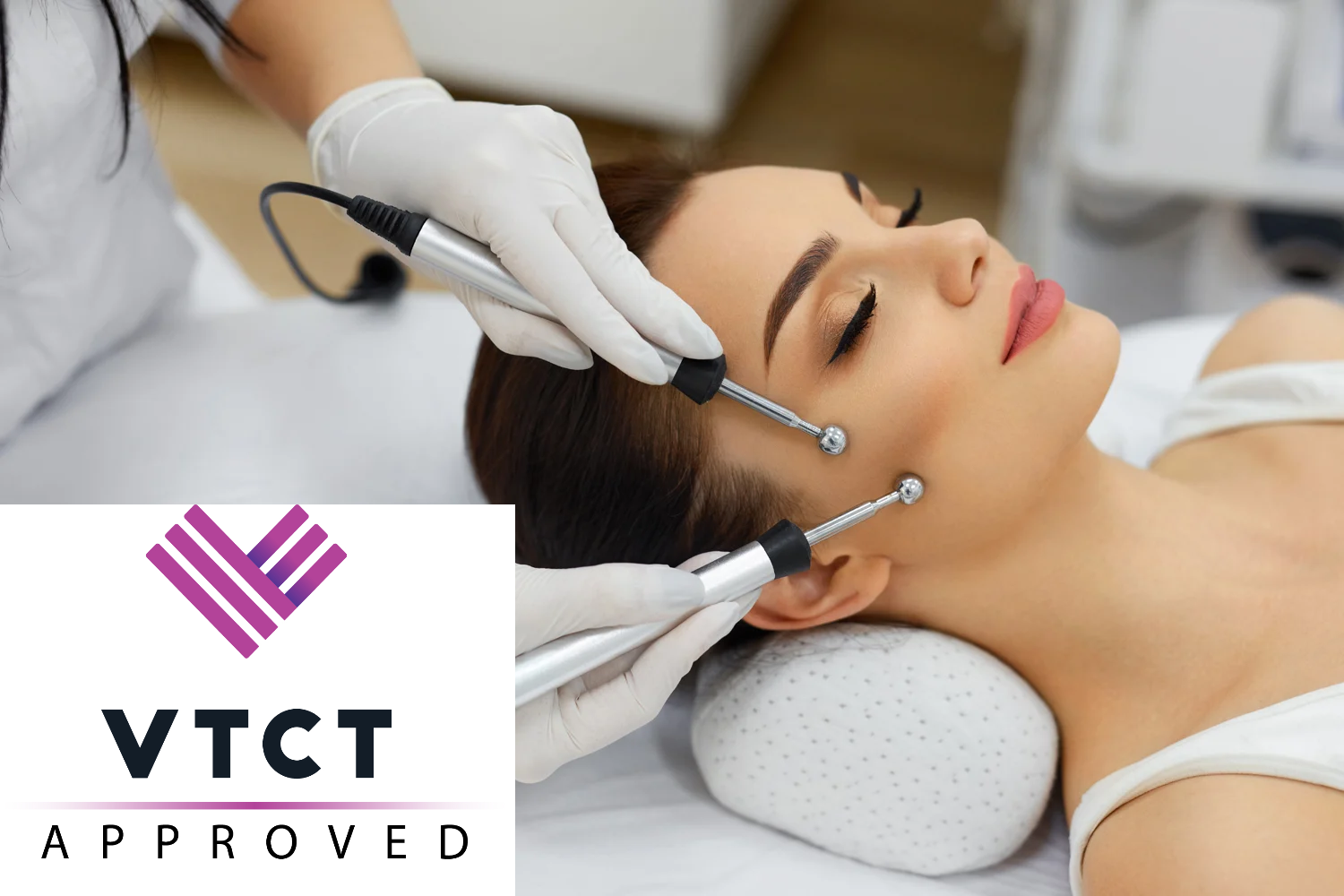
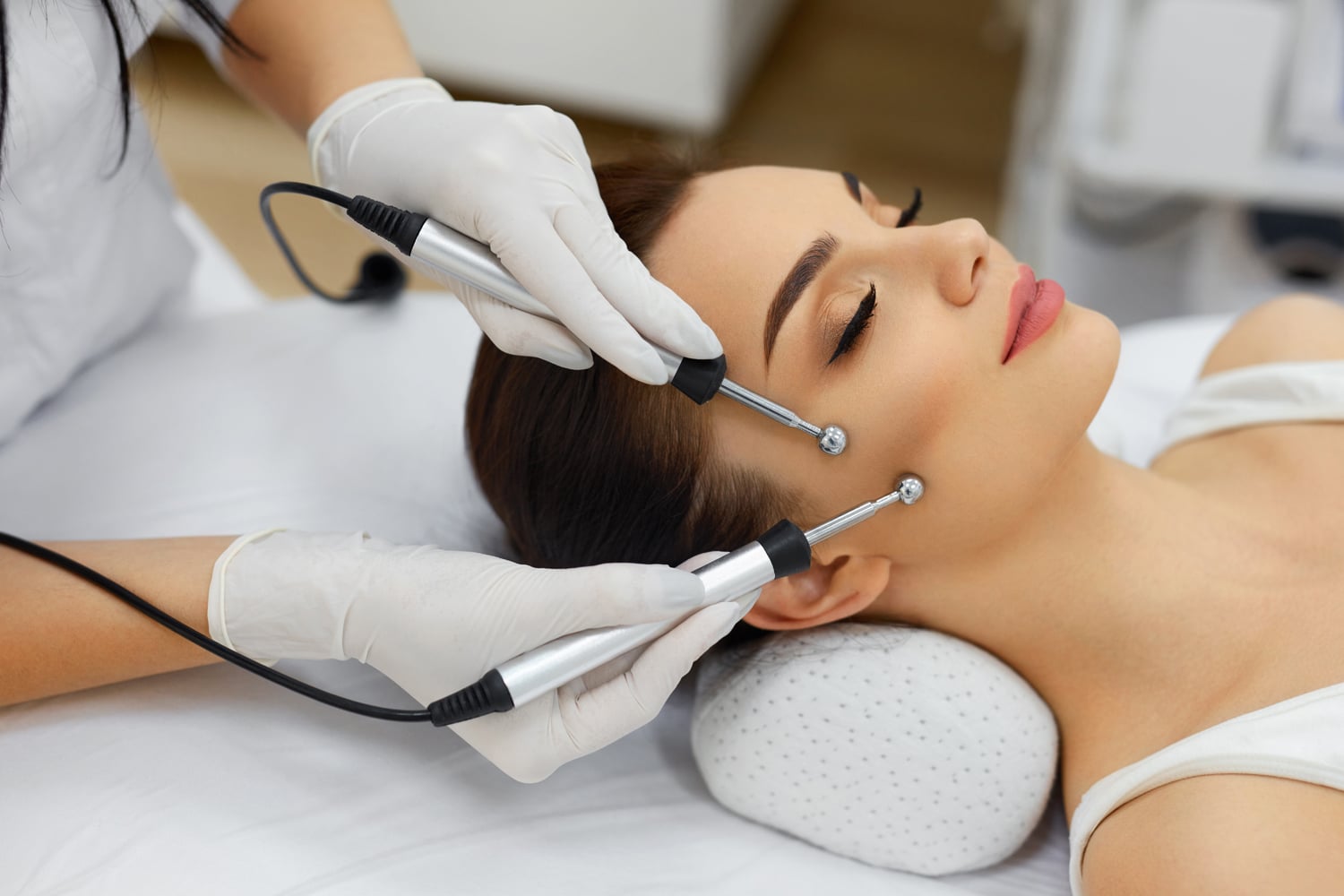
    The treatment uses very low levels of electrical current which runs between the positive and negatively charged conductors (which depending on machine are either long slender metal rods or sphere shaped applicators). When both conductors are in contact with the skin, the current flows through the muscles training them to tone up. This treatment re-educates the facial muscles, although it is not the very low current alone that achieves this. The conductors (handheld probes) working with the current to encourage effective product penetration, effectively lift the muscles, moving them into the correct position and it is this which re-educates the muscles.

    The treatment is usually delivered over a course of 6-12 treatments to execrise the facial muscles with little or no sensation from the current felt (making it an enjoyable treatment also). The current and movements encourage boosted lymph and blood circulation, speeding up cell renewal and collagen formation. This improves the health of the cells in the skin giving improved complexion. Once the course of treatments is complete, maintenance treatments are recommended to hold the lifting effect achieved (usually as part of a monthly facial).

    Are microcurrent facials safe?

    Microcurrent facials use such a low level of electrical current, they are entirely safe and with no downtime following treatment. There are some clients for which these treatments are unsuitable including pregnant clients, those with diabetes and those with heart conditions (such as pacemaker). It is also not recommended for those with active, moderate to severe acne as this can create further inflammation by stimulating already sensitive skin, however for those with the odd pimple or congestion in the pores, the treatment can actually help encourage a clearer complexion.

    Why learn to provide microcurrent facials?

    Microcurrent facials are a very lucrative treatment to offer as they are usually booked as a course of treatments with at least monthly maintenance required thereafter. Effects are immediately visible with improved radiance and glow to the skin initially, and lifting effects soon seen over the course of treatments. With no downtime, clients can combine microcurrent facials with other facial services you may already offer such as LED light therapy or microneedling for optimum anti-aging facial benefits. Microcurrent facials can be tailored to treat specific areas of the skin or indeed specific skincare concerns also and is suitable for almost all skin types including sensitive skin. The treatments are best combined with anti-aging serums which also present an ideal retail sales opportunity for salons / therapists.

    Microcurrent machines can be purchased from as little as ยฃ400 from leading suppliers, with minimal treatment cost beyond the products used per treatment giving impressive profit margins.

    Treatments take as little as 30-45 minutes also, allowing to maximise clients. Unlike more invasive treatments, there is no special insurance requirements (beyond completion of a recognised training course) and you do not need high level qualifications such as VTCT Level 3 Beauty or a medical background to train within or begin offering microcurrent facial services, making them accessible for all therapists who want to learn or can already provide basic facial skincare treatments.

    How can I learn to provide microcurrent facials?

    You may be pleasantly surprised to learn you can learn to offer microcurrent facial treatments with our Online Micro-current & Vacuum Suction Training Course at Only ยฃ99! The course can be studied at your own pace, conveniently online through our student portal. Detailed course resources and step by step videos allow you to learn all theory and treatment procedure to confidently provide these facial treatments. The only pre-requirement is to already be trained within Facial Massage & Skincare. We do offer an Online Facial Massage & Skincare Course which can be studied alongside the online microcurrent course for those who do not yet hold this training.

    For those who prefer to attend training face to face, we also offer this training as part of our classroom based Electrical Facials Course, ensuring there is an option for you no matter how you prefer to learn!

    So whatโ€™s stopping you? Get onboard with microcurrent facial treatments today!

  • Which Aesthetic Facial treatment should you choose to meet your client’s skincare needs?

    Which Aesthetic Facial treatment should you choose to meet your client’s skincare needs?

    Smiling woman at an aesthetics clinic


    This week’s blog is all about how to differentiate between the various advanced facial tools at our disposal. The beauty of Aesthetic treatments is that its not one show fits all, as professional therapists its our role to investigate and analyse our clients needs and skin concerns and prescribe the best course of action. We’re going to take a deeper look into four popular Aesthetic treatments, what skin they suit and how to use them in combination with one another to get the best results possible!

    Before you make a decision on the treatment or course of treatments your client should embark on a thorough consultation is needed, this is a bookable service with many clinics charging a small fee for their appointment time. A consultation appointment can range between 15-30 minutes. During this time you can request that the client fill in a facial consultation card so that you may find out more information on their skin care goals, current treatment and products they are using as well as their medical history. Once you have a broader understanding of your clients skin needs we recommend having a look at their skin, a detailed analysis will allow you to identify the skin concerns and areas that need focussing on. Following your investigation, with the client you can start to plan the treatment or course of treatments most suitable…

    What methods are available?

    In todays blog we’re going to focus on four of the most popular Aesthetic treatments in the industry, below you will see their benefits and the skins most suitable to enable you to make informed decisions on the best action to take for your clients skin.

    Derma planingย 

    What are the benefits?

    • Removes dead skin cells
    • Rids the skin of โ€˜peach fuzzโ€™
    • Helps to unblock blackheads
    • Generates new healthy cells
    • Creates healthier, smoother more radiant skin.
    • Corrects uneven skin tone and texture
    • Allows greater penetration for skin care products
    • Reduces the appearance of fine lines and wrinkles

    As Derma planing allows for greater penetration of product it works extremely well with Chemical Peels and advanced serums to further increase their efficiency (always check manufacturers guidelines)ย There is also the option to combine Derma planing with Micro needling, always perform Derma planing first, this would suit a client with dull, thicker/coarse skin with signs of ageing or acne scarring.

    What skin concerns benefit from Derma planing?ย 

    • Dull, Dry or Dehydrated skin
    • Sun damaged skin in need of brightening
    • Congested Skin (do not perform on active acne breakouts)
    • Premature Ageing

    Micro Needlingย 

    Client receiving a microneedling facial

    What are the benefits?

    • Helps to reduce the appearance of fine lines and wrinkles.
    • Reduce the appearance of acne scaring.
    • Refines large pores.
    • Helps products penetrate deeper into the epidermis.
    • Rejuvenates and firms the skin.
    • Brightens the skin through application of products.
    • Can reduce the appearance of stretch marks.
    • Hyper pigmentation.
    • Rosacea
    • Hair restoration

    What skin concerns benefit from Micro needling?ย 

    • More advanced ageing concerns i.e lines and wrinkles
    • Sun damaged skin in need of brightening
    • Acne scarring (do not perform on breakouts)
    • Stretch marks

    Micro needling works extremely well with LED light therapy, using a red LED light following Micro needling will support the healing process further and help to stimulate collagen production.


    LED Light therapyย 

    Client receiving LED light therapy

    What are the benefits?

    Benefits:

    • Reduce and heal acne
    • Prevent acne breakouts
    • Reduce age spots
    • Reduce freckles
    • Reduce Hyper pigmentation
    • Reduce sun damage
    • Reduce large pores

    What skin concerns benefit from LED Light therapy?ย 

    • Sensitive and rosacea skins
    • Acne breakouts
    • Premature ageing
    • Hyper pigmentation

    As a main function of LED light therapy is to promote healing it compliments all Aesthetic treatments. Use after chemical peels, derma planing and micro needling services to promote healing and wound repair.

    Chemical Peelsย 

    Client receiving an aesthetic facial treatment

    What are the benefits?

    • Reduce fine lines under the eyes and around the mouth
    • Treat wrinkles caused by sun damage and aging
    • Improve the appearance of mild scars
    • Treat certain types of acne
    • ย Reduce age spots, freckles and dark patches (melasma) due to pregnancy or due to taking birth control pills
    • Improve the look and feel of the skin generally.

    What skin concerns benefit from Chemical Peeling?ย 

    • Dull, Dry or Dehydrated skin
    • Sun damaged skin in need of brightening
    • Congested and Acne prone skin
    • Premature Ageing

    Interested more in Aesthetics? Ourย Ultimate Aesthetics training packageย includes everything you need to get started within this arena!

    This training package combines all of our Aesthetics Courses, plus covers knowledge of anatomy and physiology. Ideal for those new to facial treatments / aesthetics and looking to take their beauty career to a specialist level. These lucrative and in-demand treatments will typically earn you between ยฃ40-ยฃ100 an hour. There has never been a better time to train within advanced facial skincare!

    As part of this two day training course package, you will learn the most popular advanced skincare treatments in the industry and how to combine these treatments to provide specialised and tailored facial skincare to meet the needs of your clients, whether they are seeking clearer skin from acne conditions to skin plumping from the anti-aging benefits.ย 

  • Should I invest in Microneedling?

    Should I invest in Microneedling?

    Client receiving a microneedling treatment

    Medical microneedling, also known as collagen induction therapy, has been widely used in aesthetic medicine for many years. The first recorded use of microneedling was in 1905 by German dermatologist Ernst Kromayer. He experimented with various-sized dental burs mounted on motor-driven flexible cord equipment and used this technique to treat scars, birthmarks and hyperpigmentation.

    By 1995, a new technique was discovered by Dr Desmond Fernandes for the treatment of wrinkles and scars with the use of hypodermic needles. Around the same time, Dr Fernandes developed a small needle stamp to induce collagen production. This later led to the development of our modern micro-needling devices.


    Collagen induction therapy skin diagram

    What are the benefits of Micro needling?ย 

    Microneedling works by encouraging your skin to make more collagen.The pinpricks from the procedure causes slight injury to the skin and the skin responds by making new collagen-rich tissue. This new skin tissue is, in turn, more even in tone and texture. Because the needles used in this treatment are so small and penetrate very shallowly into the skin, microneedling is generally not painful. However, it stimulates your bodyโ€™s natural wound response, forcing your skin to heal. The treatments biggest appeal is the minimal downtime, normally within 24-48 hours.

    • Helps to reduce the appearance of fine lines and wrinkles.
    • Reduce the appearance of acne scaring.
    • Refines large pores.
    • Helps products penetrate deeper into the epidermis.
    • Rejuvenates and firms the skin.
    • Brightens the skin through application of products.
    • Can reduce the appearance of stretch marks.
    • Hyper pigmentation.
    • Rosacea
    • Hair restoration


    Woman using a derma roller on her face

    Derma roller or Derma pen?ย 

    Skin-needling can be a very personal preference, however more experience will generally leave therapist craving the digital skin needling pen. The skin needling pen can adjust the needle depth and speed for different skin types, thicknesses and also conditions. The puncture wounds with the digital pen are generally finer and can produce more punctures and can be less painful in the skin.

    The digital skin needle pen (dermapen) can be expensive as a first purchase but can work out much more cost effective as the needle heads generally work out a few pounds dependant on where you purchase them. They can be purchased from a 12 pin to 36 pin. The 36 pin can feel more comfortable for the client as the surface area is larger.

    Derma skin rollers can range from ยฃ10 to ยฃ35 per roller depending upon the supplier. The rollers are available in a variety of needle length options.

    Derma skin rollers create a cone like shape in the skin so can be more painful for the client and also can create more trauma in the skin.


    How much can I charge?

    Micro needling treatment costsย can vary depending on the area that is being treatment, the products and the combination of other modalities such as peels and LED light therapy. Treatments would usually start at around ยฃ150 per session, typically clients need 3-5 sessions to treat a more advanced concern such as acne scarring but may see improvement after the first session. Many clinics and skin centres will offer a consultation prior to a treatment session for the therapist to assist the treatments needed and provide the client with a quote for their services, including the amount and frequency of the treatments. Microneedling for larger areas of scarring such as areas of the body for scarring and stretch marks can start at ยฃ250 per session ranging to ยฃ450 for a longer session time.


    How do I train?ย 

    Our half day Micro needling course is an intensive advanced facial skincare training course that will teach you to deliver these in-demand treatments with confidence.

    The course will cover the following areas:

    • Revise Skin Anatomy & Physiology
    • Health & Safety
    • Correct selection & use of products/tools
    • Overview of Microneedling
    • Consultation & Contraindications
    • Treatment Procedure
    • Homecare & Aftercare

    As part of this course, you will complete online study prior to attending the practical training to cover the essential theory around anatomy, physiology, health and safety and theory of the treatment. Our team will also contact you by phone for a mini-consultation prior to confirming your training place to ensure you are free of contra-indications to fully participate in the training & hold the entry requirement qualifications.

  • Top non-invasive Facial tools

    Top non-invasive Facial tools

    Jade facial roller and gua sha with skincare products

    With a recent increase in demand for Advanced Aesthetic procedures it can be easy to forget the various non-invasive tools at our disposal both in and out of the treatment room. Tools designed to lift, sculpt and impact the health of the skin. In this weeks blog we’ll look at the benefits of such tools and how to incorporate them into at-home and Facial treatments.

    Gua Sha

    Woman using a rose quartz gua sha on her face

    The ancient tool of Gua Sha was developed in China and has deep roots with eastern medicine practices. Traditionally used to help remove stagnant ‘Chi’ energy, the practice of using Gua sha to rub the skins surface would help to balance and promote healing. In modern practice the use of Gua Sha within Facials and during an at home routine can promote circulation, bringing much needed nutrients to the surface of the skin, increasing luminosity and toning. A versatile tool, it can be used with the majority of products such as cleansers, masks and serums.


    Cryo Ice globesย 

    Client receiving a facial with ice globes

    A favourite with Acne and sensitive skins these tools are a fantastic addition to soothe and relieve puffiness. The cooling effect of the globes when massaged onto the skin will elevate puffy eyes, constricting capillaries to reduce redness and reduce inflammatory acne breakouts. An ideal companion to chemical peels, these globes can also be used with cooling masks or as part of a massage. Ice globes can also be used on the body to reduce oedema perfect for summer months!

    Silicone Facial Brushesย 

    Woman using a facial cleansing brush

    Vibrating silicone face brushes can increase the power of your cleanse by up to 5 times! Perfect for dull, congested skin in need of a deep clean. Incorporate as part of a second cleanse. Silicone is easy to clean and drys faster than traditional facial brushes meaning no bacteria is left behind after rinsing!

    LED Therapy

    Client receiving LED light therapy

    LED Light Therapy works to soothe the skin, it is a relaxing treatment to receive and also offers hugely rejuvenating benefits to the skin when offered as a standalone treatment. The benefits of LED light therapy for facial treatments include treating acne, regulating natural oil production, stimulating collagen and elastin and minimising redness and wrinkles. LED light therapy has also been used for decades to boost the speed of healing and cell renewal, so is an ideal treatment to follow and finish other advanced aesthetics treatments such as Dermaplaning, Microneedling or Skin Peel.

    Facial cuppingย 

    Client receiving a facial cupping massage

    A scaled down version of body cupping, facial cupping has very similar benefits. Using soft cups to create a vacuum suction effect to stimulating circulation to the facial tissues. Increased circulation will promote cell repair, elevate tension and aid regeneration. Ideal for sluggish dull skin tones, cupping with promote a brighter more youthful complexion. Ideally carried out in a series of treatments for the best results.

    Facial Yogaย 

    Sequence of facial exercise poses

    More of an at-home technique, introducing our clients to facial yoga will help to reduce muscle tension that can lead to fine lines and wrinkles. Another eastern approach, facial yoga has been used for generations as a non-invasive way to reduce ageing and prolong a youthful, firm skin tone.


  • Start a Career in Aesthetics

    Start a Career in Aesthetics


    Aesthetics treatment being applied to a client's face

    The Facial and Aesthetics Industry has boomed over the last decade, with net growth expanding year on year. However there are some challenges with this ever expanding industry. With a lack of regulation and standards comes an increase in unregulated training and clinics lacking the essential knowledge, qualifications and insurance to perform effective treatments.

    If you are just starting out it can be hard to navigate where to go for the right training essential to gain insurance. Here is our guide for getting started with Aesthetics.

    Preย requisites for study

    As Aesthetic treatments are advanced treatments that can impact the skin on a molecular level, you will need to have the skills and knowledge to safely deliver these services to your clients. To gain the most from these advanced courses, before undertaking our Aesthetic training courses, we set the minimum pre requirement as:

    Do check with your future insurance provider for these treatments prior to booking as the pre requirements for insurance can vary significantly between providers with some being happy to accept simply an accredited diploma in Facial Skincare, whereas others set the minimum standard as VTCT qualifications at Level 2 and/or Level 3, depending on the specific treatments you wish to be insured for.

    Where Level 2 and/or 3 is required, we recommend the following qualification courses which allow you to gain knowledge of a range of treatments for a good all-round beauty skill set. These can be booked and studied alongside our Aesthetics courses to fast-track your studies:

    OR


    Or for those want to specialise purely in skincare and aesthetics, to fast track your career, save you money on training costs (and as accepted by your insurer), we highly recommend simply taking these courses alongside our Aesthetics courses:


    Choosing the right treatment for your business

    There are a variety of treatments available and these are expanding regularly. Here are some examples of current popular treatments.

    • Dermaplaningย offers deep exfoliation removing dead skin cells, blockages, make up and vellus hair from the upper layer of the surface of the skin using a surgical scalpel to refine skin.
    • Microneedlingย also known as dermarolling or collagen induction therapy is administered using a dermaroller or automated pen applicator to stimulate collagen growth and repairing of skin.
    • Skin Peels, often known also as โ€˜chemicalโ€™ peels work using natural acids to exfoliate the skin and remove dead skin cells using specialised products applied topically to the skin.
    • LED Lightย Therapyย works to soothe the skin, boosting natural skin healing following more invasive treatments and is hugely rejuvenating for the skin.ย 


    Accreditation and Insurance

    In order to gain insurance you will be required to present your insurance company with an accredited certificate. Beware of courses out there which only provide a CPD registered certificate as these are not widely accepted for insurance, as many do not involve hands-on practical as part of the course. An accredited certificate proves that you have completed training with a reputable training provider that meets the standards of the industry and demonstrated practical competence as part of the course. It is important to do your research when decided on which courses to undertake. Here at The Beauty Academy, all of our Classroom based courses are accredited by Associated Beauty Therapists (ABT) and are fully insurable.


    Marketing your treatments

    Now is the time to start promoting the treatments to your clients. Your current Facial clients are the ideal place to start, these treatments will also attract new clients more interested in instant results! Below are a few ways to get started with promoting the new treatments.

    Existing Facial clients:

    • Send out e-blast messages sharing the benefits of the new treatments
    • Hold a launch event, offer mini treatment tasters and demonstrations, these could be themed around the festive season or โ€˜new year new youโ€™
    • Run an introductory offer for your loyal clients
    • Change your answering phone message to highlight โ€˜whatโ€™s newโ€™
    • Link to your retail products as a way of maintaining their skin and increasing retail/treatment sales, i.e. โ€˜book a course of treatments and receive a free mini kitโ€™


    Target potential new clients:

    • Grow your social media presence, videos tend to receive more interaction than photos. Why not vlog your training journey?
    • Connect with local businesses, do you have a local bridal shop? Hairdressers? Why not team up to promote each others business, you could throw in a treatment to sweeten the deal!


    Take your career further…

    Once you are working in the aesthetics industry or offering these treatments within your own beauty business, you may decide you want to take your career further and begin offering courses or teaching aesthetics treatments to other aspiring therapists and aestheticians. You might like to consider the VTCT Level 3 in Education & Training, which is the gold standard sought by insurers and accrediting bodies to allow you to teach or offer training within these courses. This can be studied on a flexible, fast track basis entirely online from home so is ideal for a busy therapist!


  • Advanced Aesthetics Courses.. what you need to know!

    Advanced Aesthetics Courses.. what you need to know!

    NEW Advanced Aesthetics Courses!

    Client receiving an aesthetics microneedling treatment


    With our NEW Advanced Aesthetics Courses launching in November, now is the time to get prepared. In this blog weโ€™ll cover all of the actions to take for a successful roll out of the new treatments within your business.

    But firstly, what are the courses weโ€™re offering?

    • Dermaplaningย offers deep exfoliation removing dead skin cells, blockages, make up and vellus hair from the upper layer of the surface of the skin using a surgical scalpel to refine skin. (1/2 day training ยฃ349)
    • Microneedlingย also known as dermarolling or collagen induction therapy is administered using a dermaroller or automated pen applicator to stimulate collagen growth and repairing of skin. (1/2 day training ยฃ349)
    • Skin Peels, often known also as โ€˜chemicalโ€™ peels work using natural acids to exfoliate the skin and remove dead skin cells using specialised products applied topically to the skin. (1/2 day training ยฃ225)
    • LED Lightย Therapyย works to soothe the skin, boosting natural skin healing following more invasive treatments and is hugely rejuvenating for the skin. (1/2 day training ยฃ199)


    We will also be combining the courses into a 2 day training package. This training package combines all of ourย Advanced Aesthetics Coursesย for ยฃ1099.


    Get prepared.. Here are our top considerations for getting started with these new treatments!

    Prerequisites for study

    As the new courses are advanced treatments that can impact the skin on a molecular level, you will need to have the skills and knowledge to safely deliver these services to your clients. We will require all attendees to be experienced in delivering facial skin care at a professional level.

    There will be the following prerequisite qualifications needed to attend the courses:

    • VTCT Level 2 (or equivalent) in Facials
    • VTCT Level 3 (or equivalent) in Electrical Facials.


    Not yet qualified? No need to panic, we have reduced the cost of these courses by ยฃ400 until the 28th October, so now is the time to book and start your journey towards becoming an Advanced Aesthetics practitioner.


    Marketing

    Now is the time to start promoting the treatments to your clients. Your current Facial clients are the ideal place to start, these treatments will also attract new clients more interested in instant results! Below are a few ways to get started with promoting the new treatments.

    Existing Facial clients:

    • Send out e-blast messages sharing the benefits of the new treatments
    • Hold a launch event, offer mini treatment tasters and demonstrations, these could be themed around the festive season or โ€˜new year new youโ€™
    • Run an introductory offer for your loyal clients
    • Change your answering phone message to highlight โ€˜what’s newโ€™
    • Link to your retail products as a way of maintaining their skin and increasing retail/treatment sales, i.e. โ€˜book a course of treatments and receive a free miniโ€™s kitโ€™


    Target potential new clients:

    • Grow your social media presence, videos tend to receive more interaction than photos. Why not vlog your training journey?
    • Connect with local businesses, do you have a local bridal shop? Hairdressers? Why not team up to promote each others business, you could throw in a treatment to sweeten the deal!


    Preparing your and your clientโ€™s skin for the treatments

    These advanced treatments will have more of a targeted effect on the skin, treating more progressive skin challenges such as acne, ageing and hyperpigmentation. With this in mind you can start preparing your skin ready for treatments. The healthier the skin is prior to treatment the better the result and faster healing time post treatment.


    • Hydration is important

    Increasing skin hydration with richer moisturisers, adding serums and facial oils into a skin routine and using water/oil based facial masks 2-3 times a week.


    • Build up the skins tolerance level

    We wouldnโ€™t advise going straight into a chemical peel if you have never exfoliated the skin, with this in mind slowly building up your skins tolerance levels to chemical exfoliation will yield the best results. Lactic acid is a great ingredient as it also improves hydration. Avoid exfoliating at home 48hrs before your treatment


    • Retinol (Vitamin A)

    Retinol is a fantastic ingredient for skin conditions and complements these advanced treatments, but avoid using it 48hrs before.


    • SPF

    Ensure you have at least an SPF30 for everyday use following your treatment. Physical (sometimes referred to as mineral) SPF products are more tolerated by exposed skins following treatment.


    • Avoid using sunbeds and tanning before and after your treatments

    ย 

    ย 

    We hope you are as excited as we are to welcome you on these courses!


  • What advice can I give my client about staying safe in the sun?

    What advice can I give my client about staying safe in the sun?

    Woman applying sunscreen to her shoulder

    As Beauty Therapists we are in a privileged position as a trusted source of knowledge for our clients, being able to guide and educate them on the best ways to protect their skin in the sun. With the majority of our treatments taking place on their skin we are also able to draw their attention to changes or suspicious looking growths. Search online โ€˜Beauty therapist spots cancerโ€™ and you will see multiple news articles of Beauticians saving clients lives!

    Itโ€™s vital that we equip ourselves with the most up to date information to share with our clients. Todayโ€™s blog covers the ABCD of essential information relating to the impact of UV on skin.

    IMPORTANT NOTE:ย We are not in the position to diagnose, if you are ever in a position where you spot something concerning on your client skin, always refer them to their GP.

    The ABCD of UV

    A: UVA

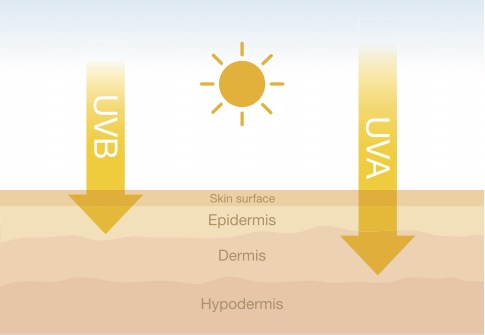
    UVA is commonly referred to as the โ€˜ageing rayโ€™ this is because It has the longest wavelength of the UV rays, meaning it has the ability to penetrate the skins lower dermal layers. Long term over exposure of UVA such as sunbathing and sun beds leads to the degeneration and mutation of cells. This breakdown of collagen and elastin is the cause of lines and wrinkles.

    Diagram of UVA and UVB rays reaching the skin

    UVA is the same strength, 365 days a year. To protect against damaging affects wear broad spectrum SPFโ€™s every day, even in winter and swap the tanning beds for a bottle!

    Long term exposure of UV rays can trigger free radicals, creating an oxidative response. This response is seen as skin mottling, hyperpigmentation and age spots. Using products with added vitamins can reduce the risk of this stress on the skin as vitamins help to fight free radical damage.

    B: UVB

    UVB is considered the โ€˜burning rayโ€™ it is much shorter and more intense than UVA. Itโ€™s UVB you can feel warming your skin when you are out in the sun and is at its most intense during summer months (particularly around midday) UVB has an accumulate affect when damaging the skin, the more your skin burns the more cells will mutate. These mutations can start to divide and multiply leading to skin cancer. skincancer.org states that 5 or more sunburns doubles your risk of developing life-threatening melanoma. (The Skin Cancer Foundation Official Website – The Skin Cancer Foundation, 2021)

    Top advice for protecting against burning:

    1. Apply SPF at least half an hour before exposure. This should be reapplied every 1-2 hours. The recommend amount is a teaspoon for the face and a shot glass for the body!
    2. Try UPF clothing. UPF clothing limits the number of rays coming into contact with the skin.
    3. Check the daily UV index and act accordingly. Reduce exposure during the hottest times of the day.


    UV index scale chart

    C: Cancer

    According to Cancer research UK 86% of skin cancer is preventable (Melanoma skin cancer statistics, 2021) So what causes skin cancer and how can we prevent it?

    Skin cancer or itโ€™s official name Melanoma is the fifth most common cancer in the UK. Although not all types of melanoma are directly linked to sun exposer the majority of cases are, this is because UV rays damage the skin. This skin damage accumulates overtime particularly in cases where the skin has been burned, causing cell and DNA damage. This cell damage mutates into cancer and can grow.

    The fairer the skin the higher the risk for developing skin cancer, this is because melanin (natural skin colour) offers some protection against UV. The darker the skin the naturally more protected it is. Although it may not happen quickly, black and asian skin can still burn so it is still important to protect the skin with SPF.

    There are various types of skin cancers and although we are not in a position to diagnose cancer on our clients, it is good to have an awareness. This awareness can help us to draw their attention to changes in their skin or growths we may think they need to get checked. Always refer clients to their doctor for a diagnosis.

    ย A reference for skin changes:

    ABCDE signs of skin cancer chartAsymmetry: is it asymmetrical or does it have a jagged edge?

    Border: does it have a border?

    Colour: is it one solid colour or does it vary?

    Diameter: has it grown in the last few months?

    Evolving: has it changed shape or evolved in the last few months?


    Visit www.cancerresearchuk.org for more statistics and information relating to skin cancer.

    ย 

    D: Vitamin D

    ย Although we have looked at the negative impact of UV on our skin itโ€™s important to note that it does play a role in a positive contribution and that is in the production of Vitamin D. Vitamin D is important for healthy bones, teeth and muscles.

    The rate in which you produce Vitamin D depends on the amount of melanin your skin natural produces, the fairer the skin the faster it will produce the Vitamin. Most people in the UK do not produce enough Vitamin D during the winter months.

    Vitamin D can be supplemented through diet by taking supplements or eating foods such as oily fish, red meats, eggs and fortified breakfast cereals.

    For more references visit:ย 

    www.cancerresearchuk.org

    https://www.nhs.uk/conditions/vitamins-and-minerals/vitamin-d/

    https://www.skincancer.org/risk-factors/sunburn/